Snap-on Gearhead Garage · Mekada, 1999 · rebuilt by TeamVanilla, 2026

Windows build 30 September 2026Android 1.0.260930.0126

Gearhead Garage Download

Gearhead Garage

Gearhead Garage

Windows 10 · 11Android 7 and newer

Snap-on Gearhead Garage, the car repair game Mekada made in 1999, rebuilt to run on today's Windows PCs and on Android phones and tablets, with the original's own cars, screens, sounds and jobs.

Windows: a 141 MB zip. Android: a 168 MB app. Each carries the whole game; there is nothing else to install.

The virtual mechanic

Every part of every car comes off, and every part wears

Buy a worn-out car at the Auction or take in a customer's, strip it in the WorkShop bolt by bolt, repair or replace what is worn with parts from the Catalog and the JunkYard, and put it back together.

The garage

The WorkShop's Go To buttons lead to the Catalog, the JunkYard, the Car Lot and the Auction

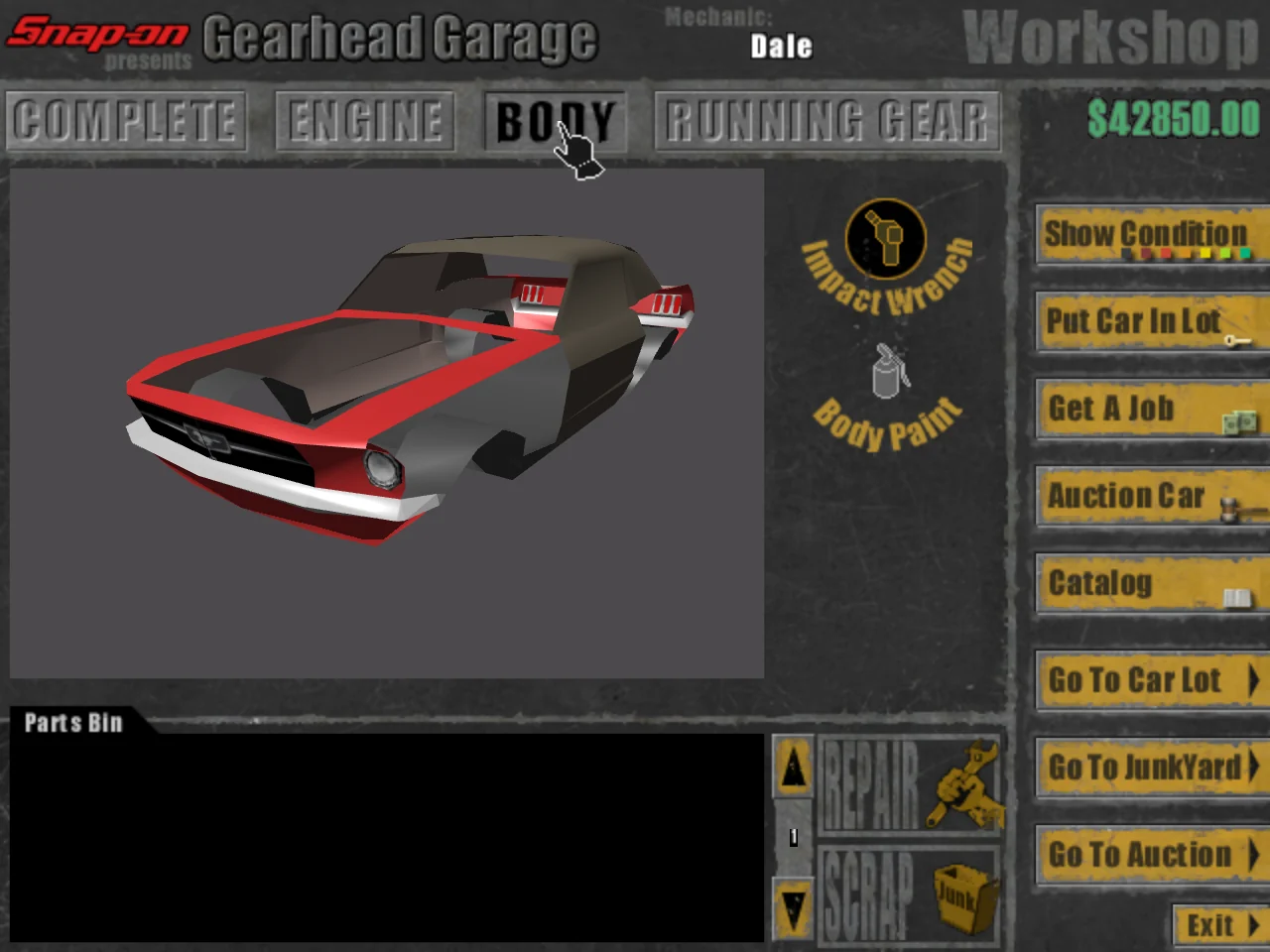
The WorkShop's Body view of a 1967 Ford Mustang, the impact wrench chosen
The WorkShopBolt by bolt

The WorkShop

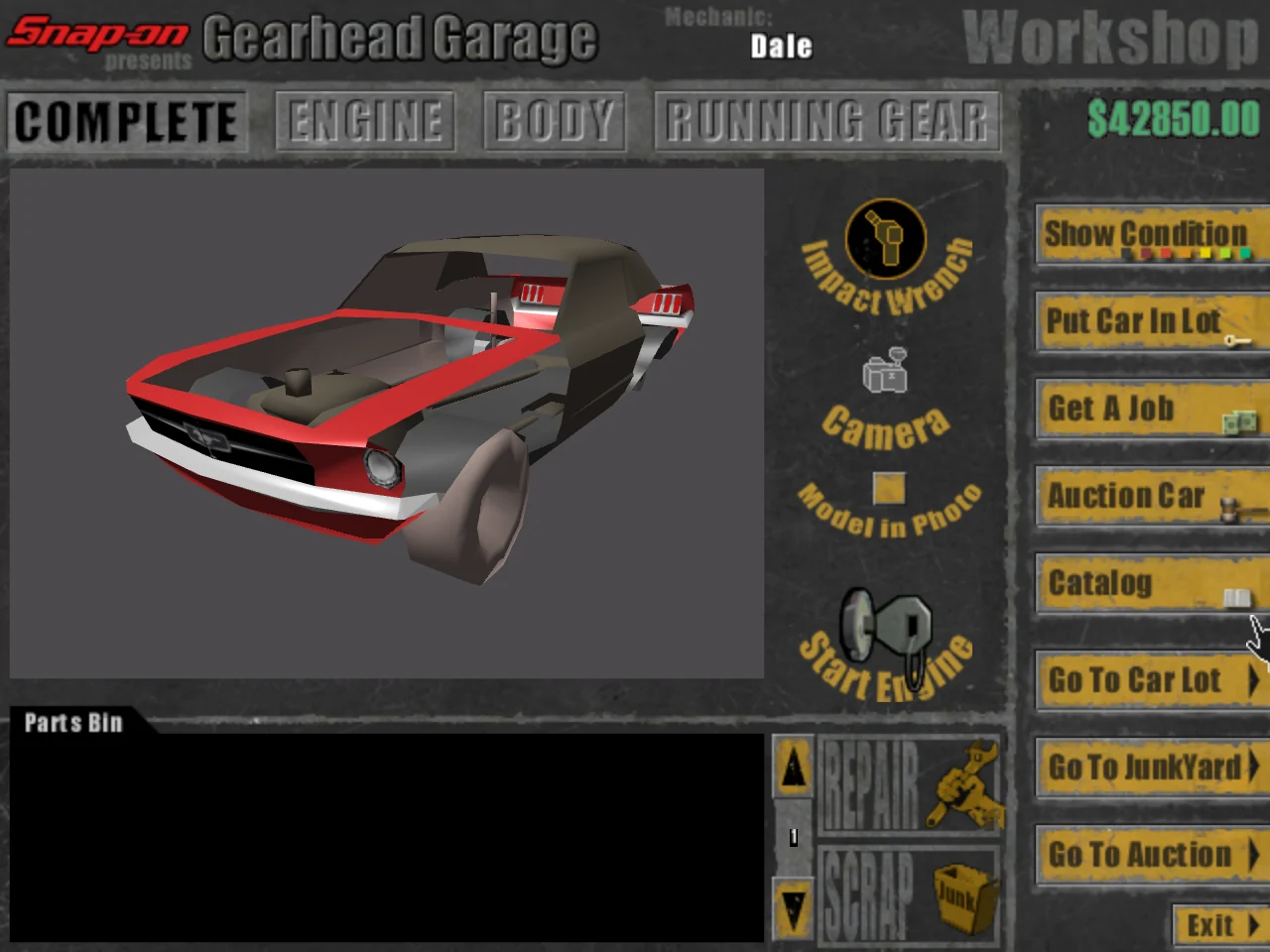
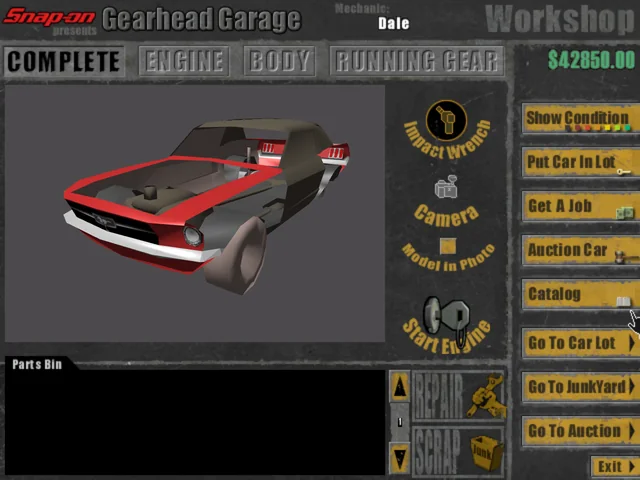
Four views of the car: Complete, Engine, Body and Running Gear. Point the impact wrench at a part and click it: its bolts are labelled, each comes out with a click, and the part drops into the Parts Bin.

  • Show Condition colours every part by its state: Perfect, Worn, Barely or Scrap
  • Drag a part from the Parts Bin onto REPAIR, for a price, onto SCRAP, or back onto the car
  • A complete car with every part Perfect is at Top Condition; the game says how long it took and what it cost
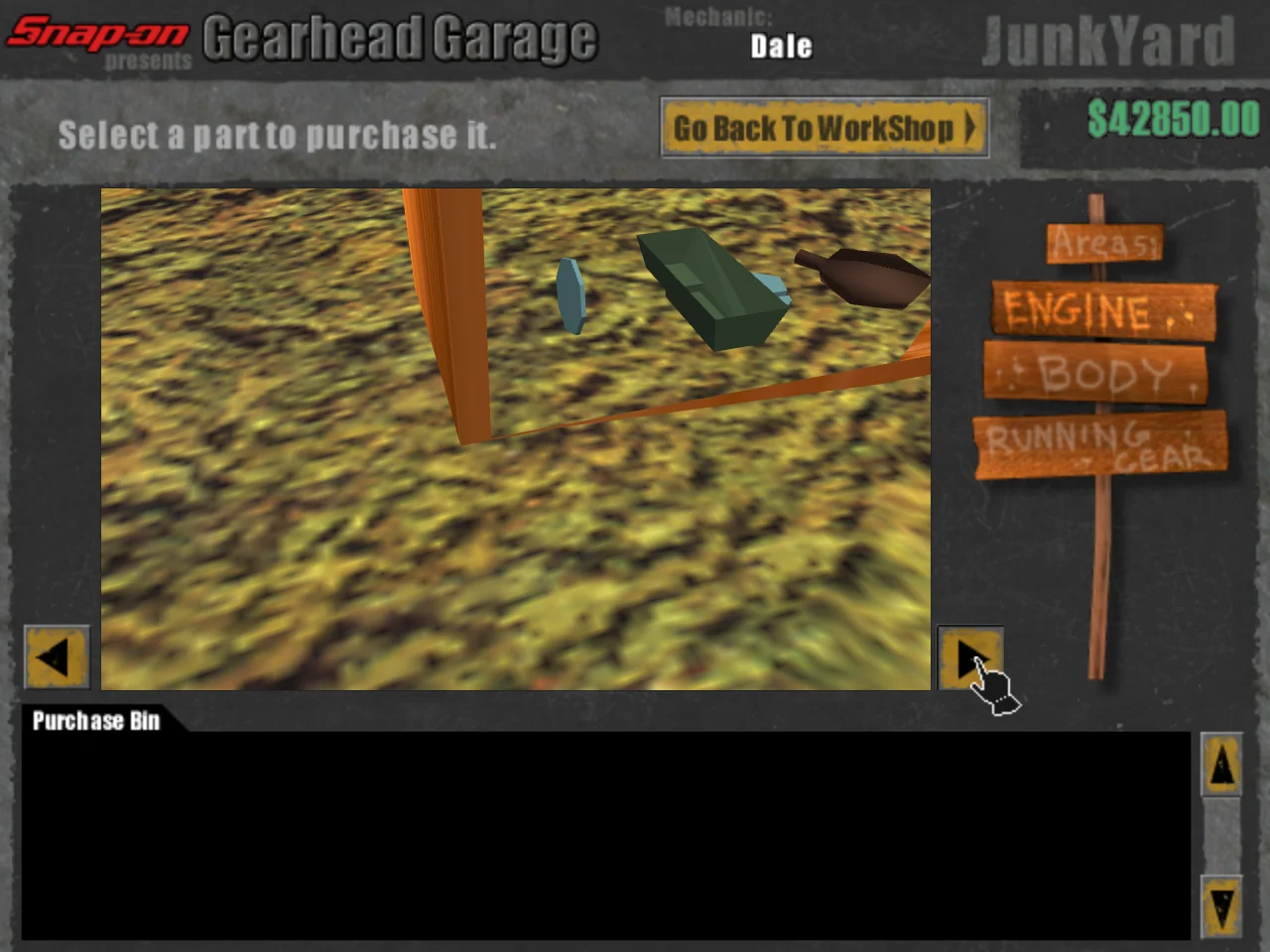
The JunkYard: used parts on the shelves of its Engine area
The JunkYard and the CatalogUsed or new

The JunkYard and the Catalog

The JunkYard's three areas, Engine, Body and Running Gear, are shelves of used parts in whatever state they are, each sold for its scrap price. Walk along them, and what you buy goes into the Purchase Bin.

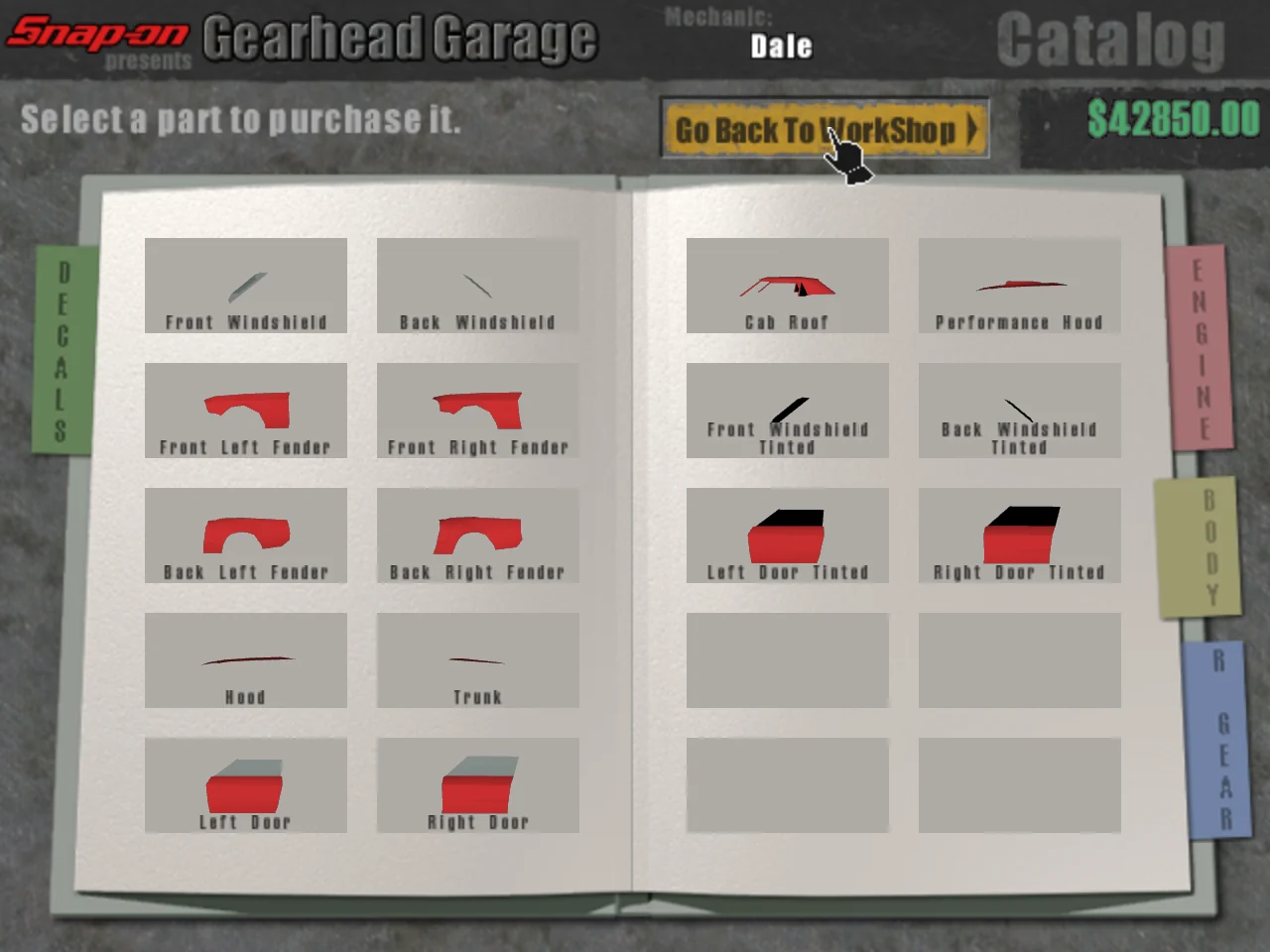
  • The Catalog sells every part of the car in the WorkShop new, chapter by chapter
  • Its Decals chapter sells decals by the pack
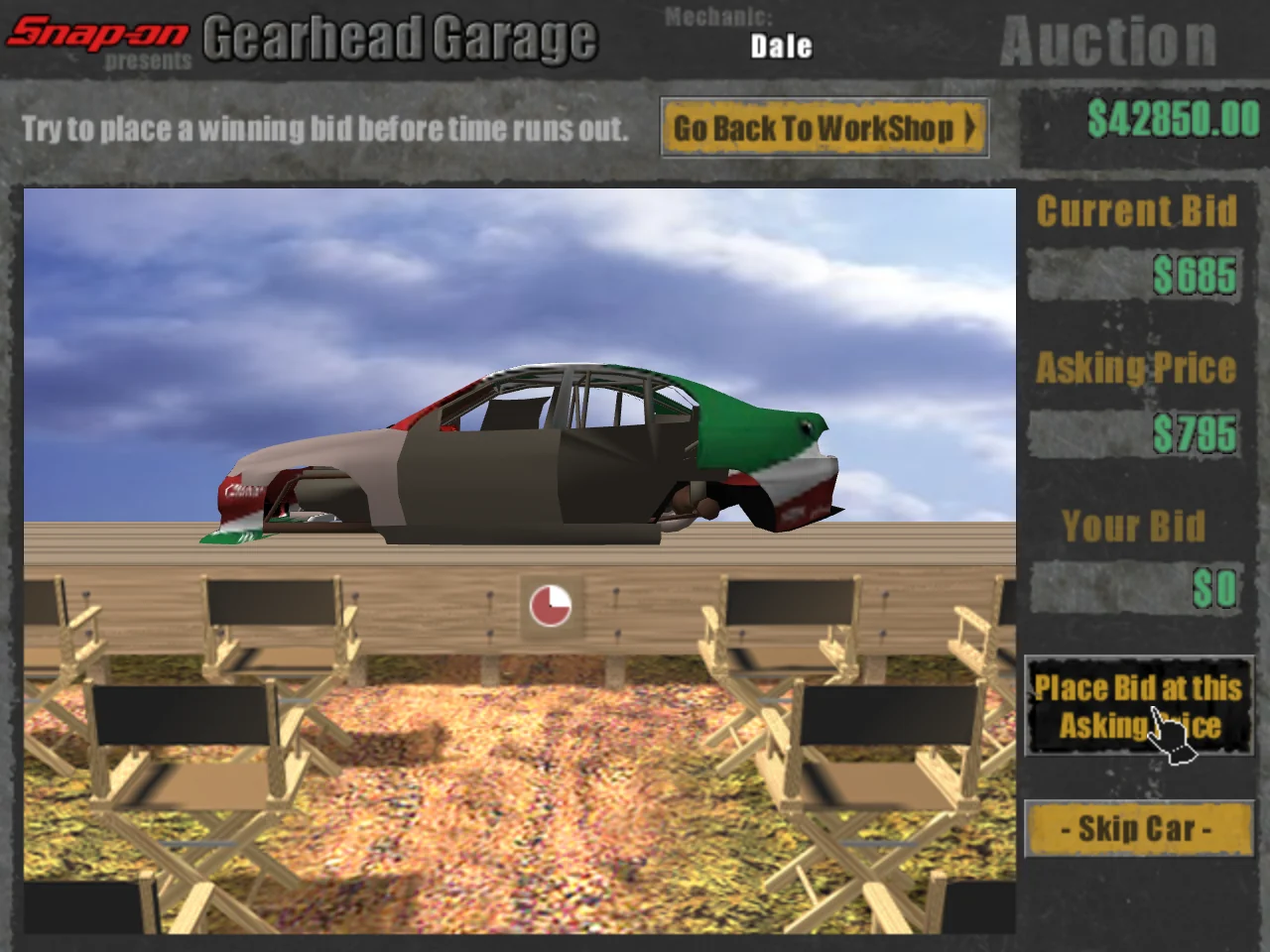
The Auction: a car on the block, the current bid and the asking price
The Auction and the Car LotTwenty seconds

The Auction and the Car Lot

A car drives onto the block and the clock runs twenty seconds. The asking price drops every two seconds and rises with every bid; six other bidders, each with their own keenness and their own ceiling, bid against you.

  • Put your own car on the block: the other bidders decide what it fetches, and the game tells you the profit or the loss
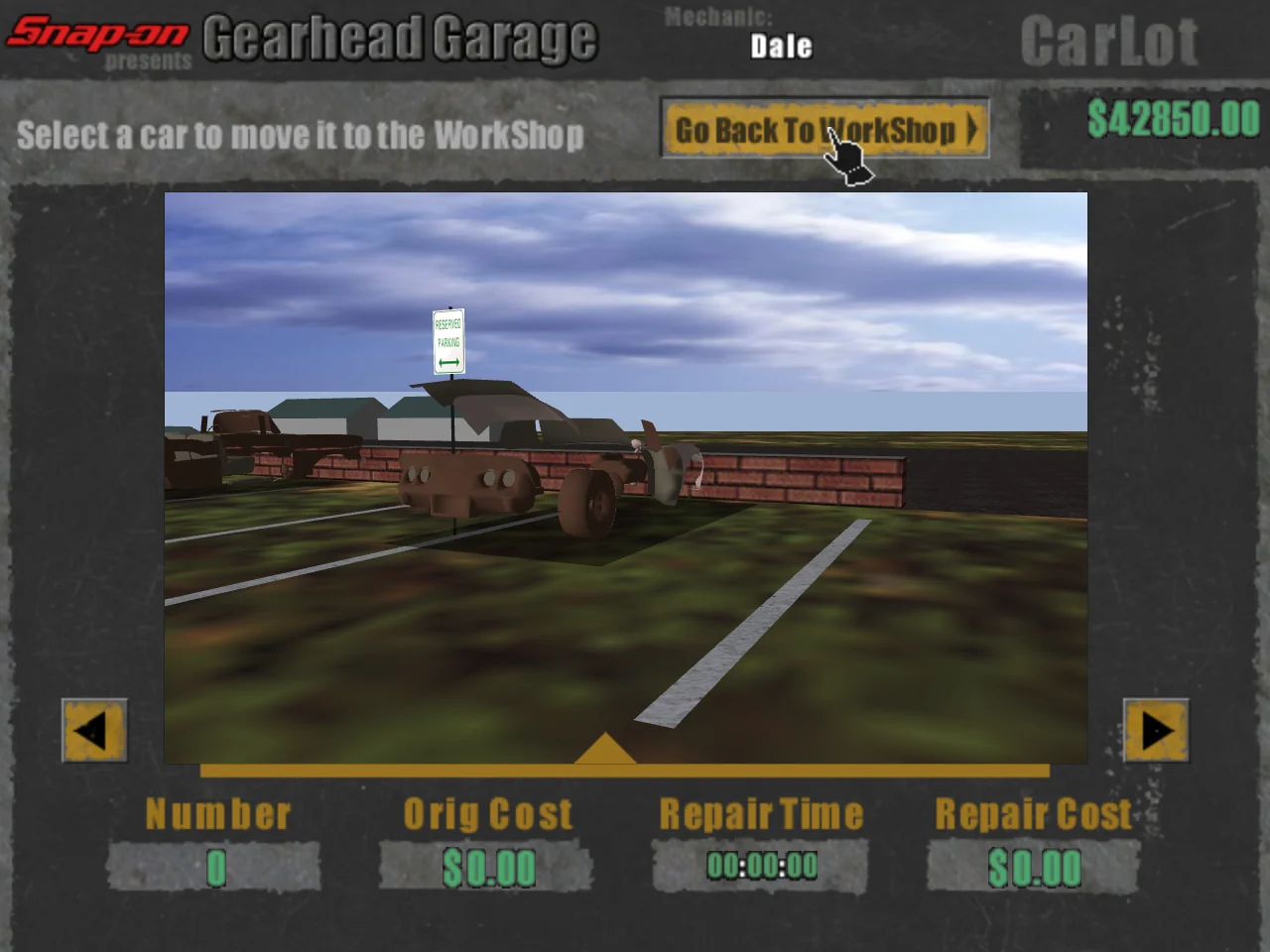
  • The Car Lot holds the cars you own and are not working on, twelve at most, with what each cost to buy and to repair
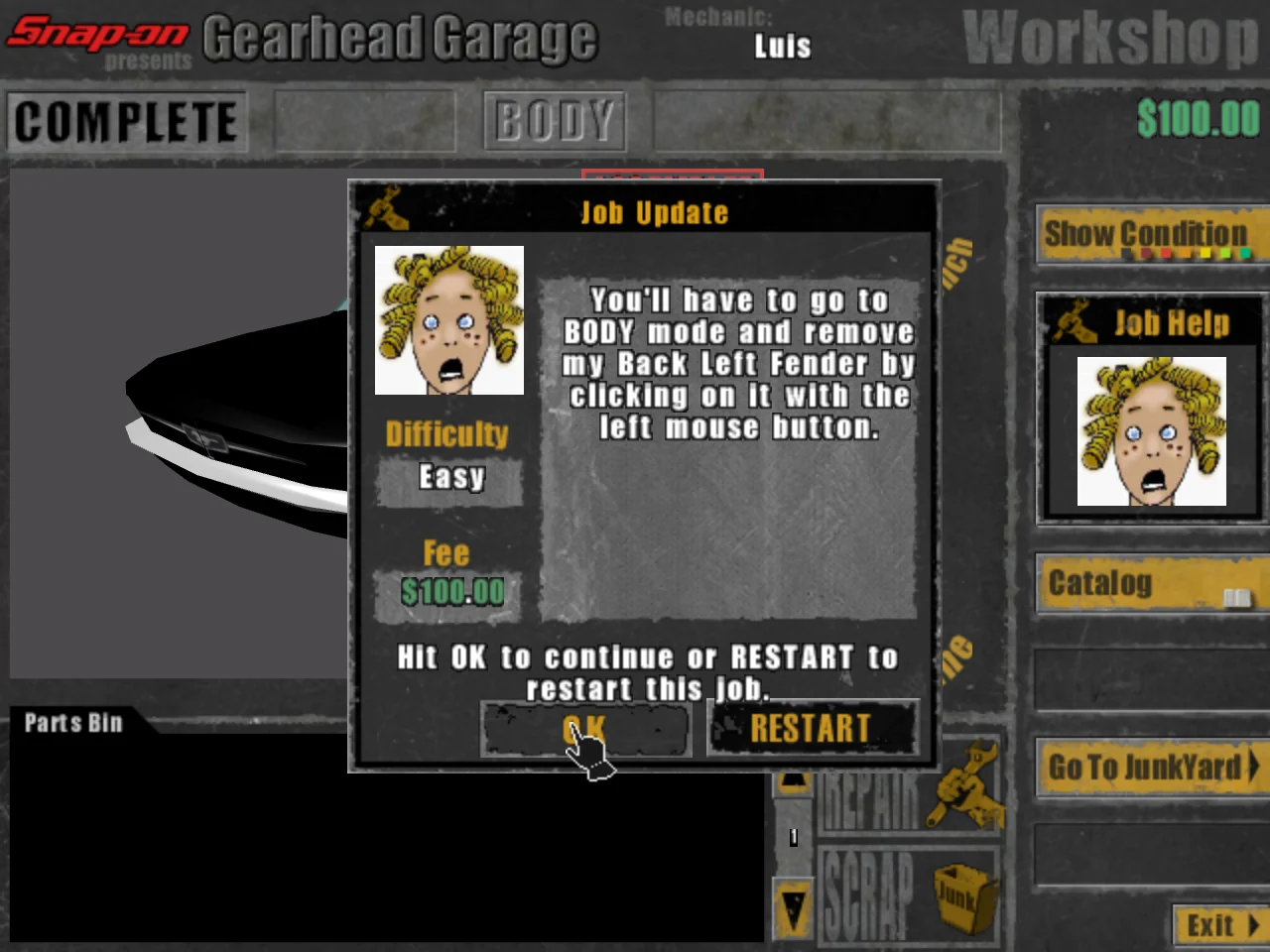
Job Help in the corner of the WorkShop: the customer's portrait and next instruction
JobsFind the fault

Jobs

Customers bring their cars in with a fault to find. The 31 jobs written for the game come first, then ones made up from its own phrase book, each with a fee, a budget and the customer's face in the corner as Job Help.

  • A new career's first jobs come by themselves; after that, Get A Job
  • Skills rise with the jobs done and the cash: Learning, Novice, Handy, Expert and Mekada, each opening more cars and harder jobs
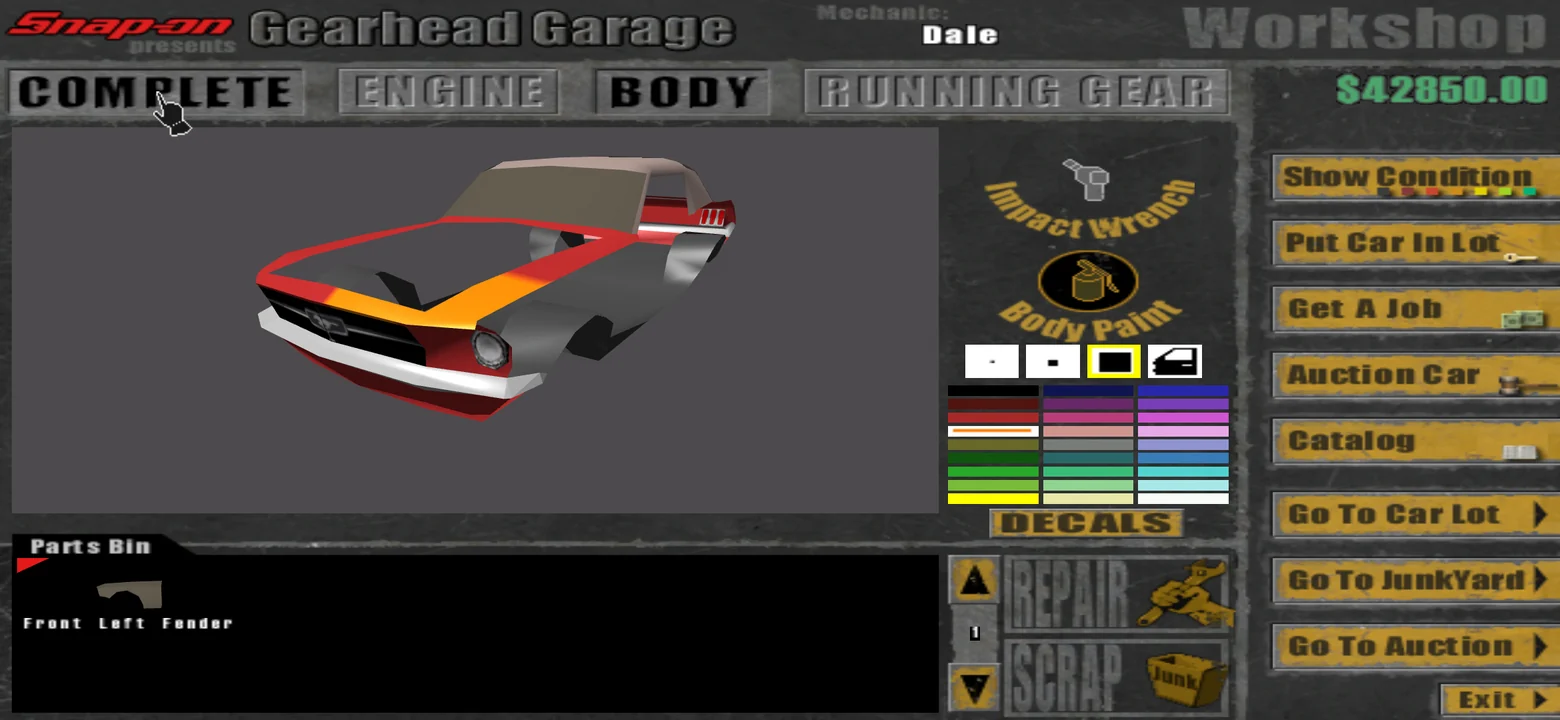
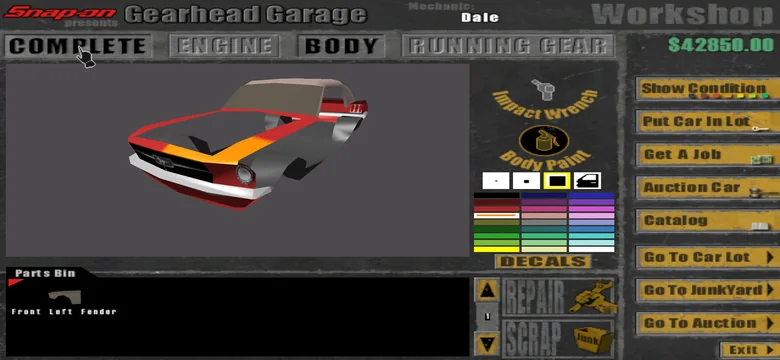
Body Paint: the spray can over a Mustang, the brushes and colours in the column
Body Paint27 colours

Body Paint and photos

Four brushes and 27 colours, sprayed through the view straight onto the car. Decals from the Catalog go on the same way, turned, flipped, sized and tinted in the Decal Browser.

  • The WorkShop camera takes the car on white, with the Mekada logo in the corner; for twelve of the cars, Model in Photo stands a figure beside it
  • Photos are JPEGs in Data\SnapShots, and Settings has a browser for every mechanic's
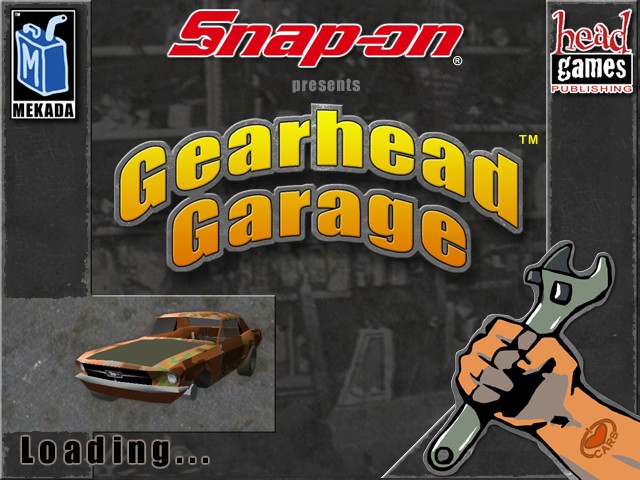
The 1999 loading screen: Snap-on presents Gearhead Garage, with the Mekada and Head Games logos, a Mustang and a gloved hand holding a wrench
The loading screen of the 1999 release.
Made by
Mekada (Ratloop, Inc.)
Designed by
Lucas Pope: concept, design, code, art and sound
Published by
Head Games Publishing
Endorsed by
Snap-on Tools
Released
1999, for Windows 95 and 98 with DirectX 7
Last update
ghg.exe of 22 April 2002
Rebuilt by
TeamVanilla, 2026

What the rebuild changes

The screens, cars, sounds and jobs are the original's, read from its own files.

  • Drawn with DirectX 12

    DirectX 11 or OpenGL take over on a card that cannot start DirectX 12. No DirectX 7, no compatibility mode, no administrator rights.

  • Any window, any screen

    A window from 640 x 480 to 2560 x 1920, or the whole screen. The picture fills a wide screen or stays 4:3; the 3D views widen instead of stretching.

  • The whole game on Android

    The app carries the game's data, 165 cars included. A tap is a click, a pinch brings the car nearer, and the phone's keyboard types a new mechanic's name.

  • Your old mechanics play on

    Mechanics are saved in the 1999 game's own file format, so a career from the original can be copied in and carried on, on the PC or the phone.

  • The car turns with the mouse

    Drag the car to turn it and the wheel brings it nearer; the JunkYard and the Car Lot walk by dragging. The arrow keys still work.

  • One program, no launcher

    The game opens straight onto the sign-in sheet. Renderer, window, anti-aliasing up to 8x, frame rate and sound are on the sheet's own Settings page.

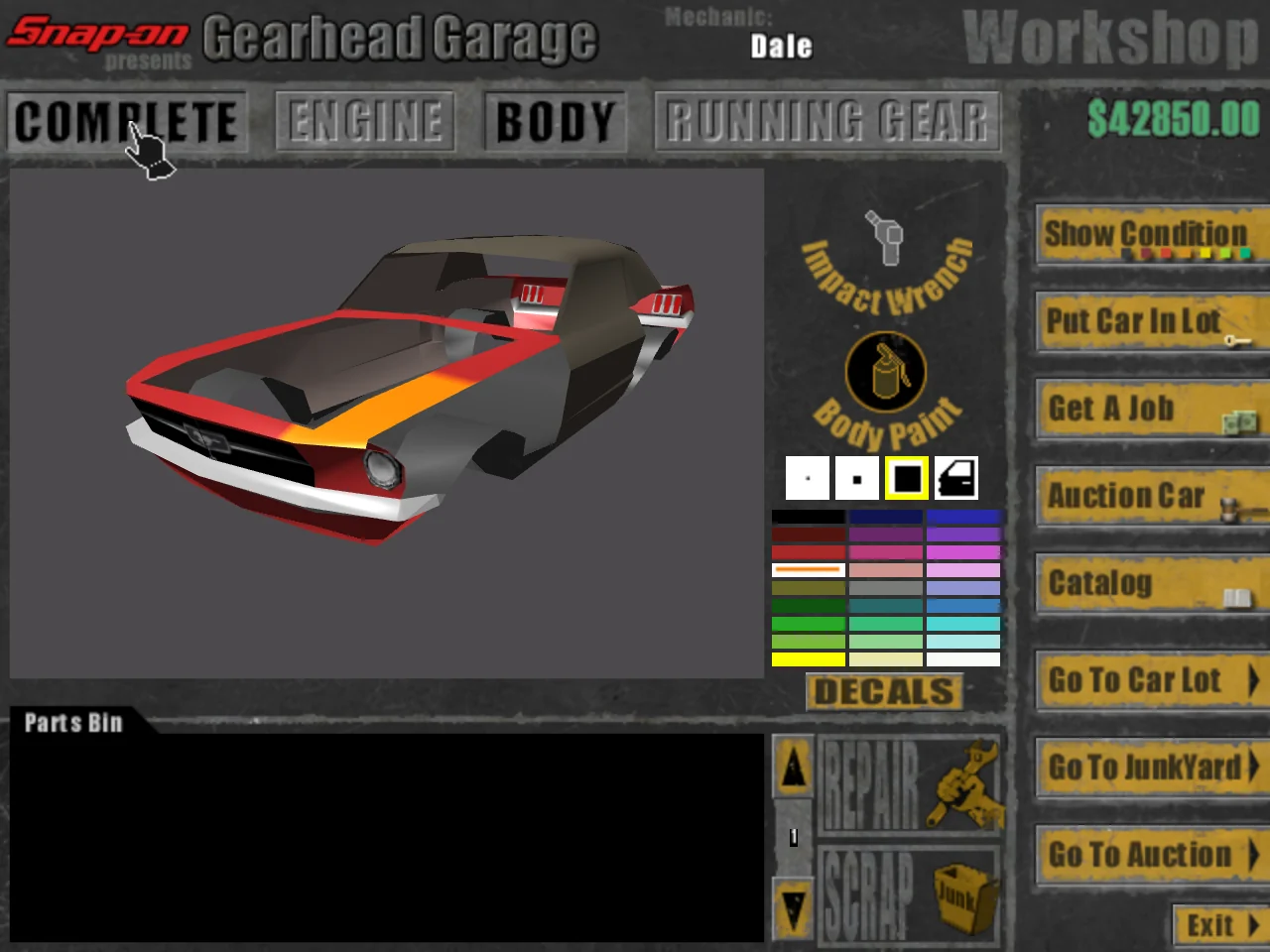
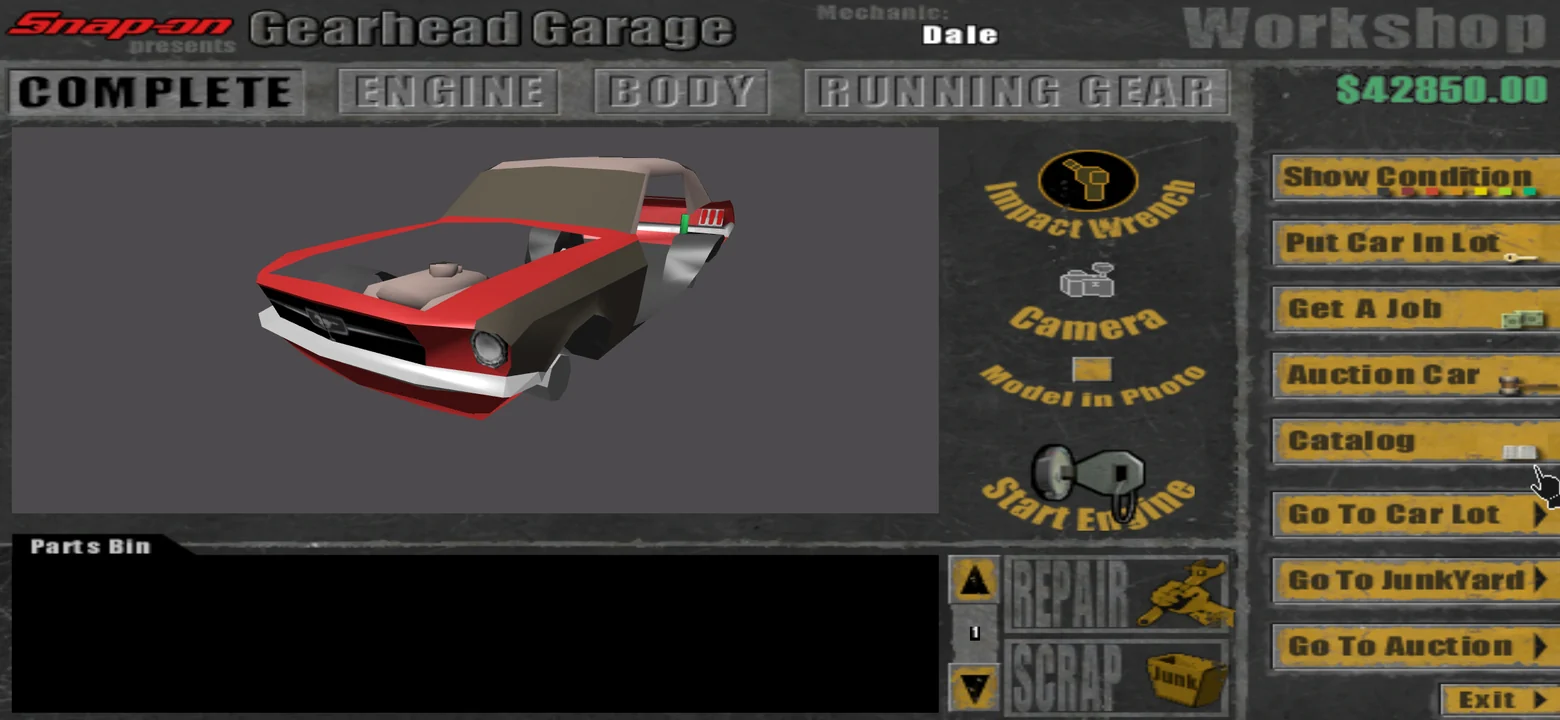
The WorkShop, Complete view: Dale's 1967 Ford Mustang, some panels still in primer

The WorkShop, Complete view: Dale's 1967 Ford Mustang, some panels still in primer

Whose game it is

Full credits and links

Mekada, the brand of Ratloop, Inc., made the game: concept, design, code, art and sound by Lucas Pope, cars by Tan Sian Yue, Chris Mullins and James Anderson. © 1999 Ratloop, Inc.

Snap-on Tools endorsed the game and gave it its name. Snap-on is a registered trademark of Snap-on Incorporated.

Head Games Publishing published and distributed it in 1999; Head Games later became part of Activision.

TeamVanilla rebuilt it for Windows and Android in 2026.

Get the game

The whole game in one download. Version 1.0.260930.0126 for Android; the Windows build of 30 September 2026.